
Renting doesn’t mean you have to settle for a space that feels plain or like it belongs to someone else. I’ve found that the best apartment decorating ideas for renters are the ones that make a noticeable difference without leaving you worried about your security deposit.
I picked these ideas because they’re the kinds of changes I’d actually make in a rental. They’re easy to undo, they can work with a smaller budget, and most of the pieces can come with you when you move.
1. Use Peel-and-Stick Wallpaper to Add Personality

I love this one because I’ve seen how quickly peel-and-stick wallpaper can change a boring rental wall. I’d use it on one accent wall, inside a closet, or even on a small section where you want a little extra personality. The best part is that you can take it with you when you move.
I’d still test a small hidden patch first. Rental paint can be unpredictable, so I’d rather spend five minutes testing it than risk an entire wall.
Before buying, I’d look for a removable, repositionable adhesive, choose a bold pattern or color for one accent wall, stick with pre-pasted or peel-and-stick options, and test a small patch in a closet first.
2. Hang Art and Mirrors With Damage-Free Hooks

This is one of those small renter tricks I keep coming back to. I really like how much more finished a room feels once you hang your art and mirrors at the right height instead of leaving the walls empty. Damage-free hooks make that possible without turning your walls into a collection of nail holes.
I’d always check the weight rating before hanging anything, especially a large mirror. Also, clean and dry the wall first so the adhesive has the best chance of holding.
For this, I’d keep heavy-duty damage-free strips for mirrors and larger frames, adhesive picture-hanging hooks for lighter art, a level to keep everything straight, and rubbing alcohol wipes for cleaning the wall first.
3. Bring in a Bold, Layered Rug
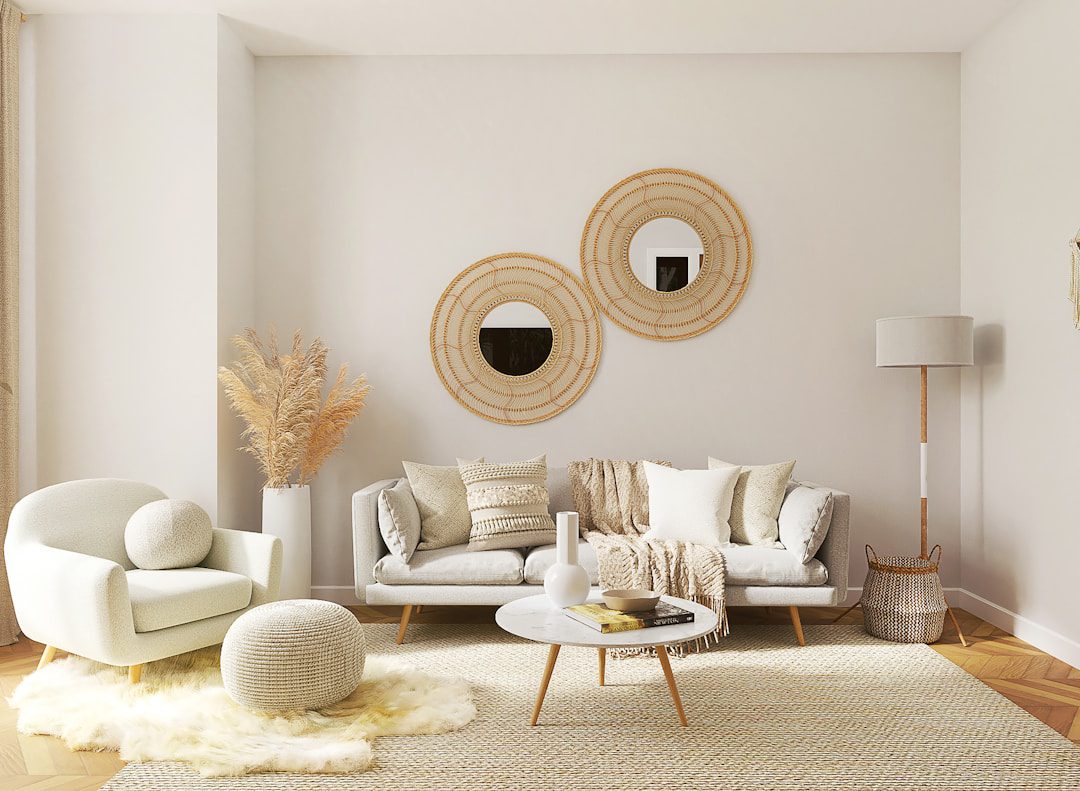
I’ve always felt that a rug can make a rental look like your home almost instantly. When I saw layered rugs used this way, I loved how the smaller patterned rug added personality without making the whole room feel busy.
If your rental has cold tile or laminate flooring, I’d definitely try this. Plus, both rugs can move with you when you eventually leave.
For a rug pairing, I’d use a large neutral base rug to anchor the room, a smaller patterned rug on top for color, a non-slip pad underneath, and washable materials if the area gets a lot of traffic.
4. Swap Out Light Fixtures (and Save the Originals)

Honestly, changing a dated light fixture can make a rental feel completely different. I’ve seen how much of a difference a simple pendant or flush mount makes, especially when the original fixture feels very builder-basic.
If you’re comfortable changing fixtures and your lease allows it, I’d keep the original fixture safely boxed away and put it back before moving. I’d also make sure the power is off at the breaker and use the existing electrical box rather than attempting any major rewiring.
I’d keep this swap simple with a statement pendant or flush mount, the original fixture stored safely, a basic screwdriver and voltage tester, and a new fixture that fits the existing junction box.
5. Add a Tension Rod for Custom Curtains

I really like tension rods for rentals because they let you add proper curtains without drilling into the wall. I think curtains make windows feel so much more finished, and this is one of the easiest ways to get that look.
I’d choose a rod that’s a little wider than the window so the curtains can sit beside the glass when they’re open. Light linen or cotton panels are my favorite here because they don’t put too much weight on the rod.
I’d pair the rod with lightweight linen or cotton panels, curtain rings or clips for smoother movement, and a sturdy rod that’s a few inches wider than the window and rated for the curtain weight.
6. Refresh a Backsplash With Peel-and-Stick Tile

I’ve seen how a tired backsplash can make an otherwise lovely rental kitchen feel dated, so this is a trick I’d happily suggest to a friend. Peel-and-stick tile gives you that little kitchen refresh without committing to a permanent renovation.
I’d clean and completely dry the backsplash first, especially if you’re working near the stove. Also, I’d test a small area before doing the whole thing because every rental surface reacts a little differently.
Before installing, I’d check that the adhesive is removable and renter-safe, make sure the wall is clean and degreased, choose tiles that fit the backsplash, and keep a utility knife and straightedge handy for clean trims.
7. Style Open Shelving With Command-Strip Brackets

I like the idea of using open shelving in a rental because it gives you somewhere to display pretty things while adding useful storage. I’ve found it especially helpful in little kitchens, bathrooms, and entryways where storage always seems to disappear.
I’d keep adhesive-mounted shelves on the lighter side. Books, small plants, and a few decorative pieces look great without putting unnecessary weight on the brackets.
I’d style the shelf with adhesive-mount floating shelves that have a suitable weight rating, a mix of books and small decor, objects at different heights, and nothing fragile right at the edges.
8. Bring in Plants to Soften the Space

Plants are probably one of my favorite ways to make a rental feel like someone actually lives there. I’ve used them to fill awkward corners and empty windowsills, and I love how much softer a room feels once you add a little greenery.
I’d choose plants based on the light you actually get rather than buying one just because it looks pretty. Plus, always use a tray or saucer underneath so watering doesn’t leave you with damaged floors.
I’d start with easy options like pothos or snake plants for low-light spaces, mix different pot heights and sizes, use water-catching trays or saucers, and add a hanging planter when floor space is tight.
9. Add a Freestanding Headboard

I’ve always liked how a headboard can make a bedroom feel finished, and a freestanding one is perfect when you’re renting. I tried this kind of setup because I wanted the cozy, put-together look without having to attach anything to the wall.
I’d measure your bed frame twice before ordering. A headboard that’s the wrong width can look awkward, so getting the proportions right makes a big difference.
Before buying, I’d look for a freestanding or frame-attached headboard, make sure the width matches your mattress size, choose an upholstered or wood finish you genuinely like, and add felt floor pads to prevent scuffs.
10. Use a Curtain as a Room Divider

I really like curtains as room dividers because they can make a studio feel like it has separate rooms without actually building anything. I’ve seen how much cozier a sleeping corner feels once you can visually close it off from the living area.
For a large divider, I’d choose a proper ceiling-mounted track rather than relying on one tension rod. It feels more secure and gives you a much cleaner result.
For a curtain divider, I’d use a ceiling-mounted track, heavier opaque fabric for privacy, a track that curves around corners if needed, and fabric that works with the rest of the room.
11. Swap Cabinet Hardware (and Keep the Originals)

This is such a small change, but I’ve seen it make a surprisingly big difference. I love swapping basic cabinet knobs for something warmer, like brass, because suddenly the kitchen feels much more intentional.
I’d keep every original knob and screw in a labeled bag. Honestly, that’s the tiny step that saves you from scrambling around at move-out trying to remember which piece went where.
I’d choose new knobs or pulls in a finish you love, keep the original hardware bagged and labeled, use a basic screwdriver, and match the existing screw spacing so you don’t need to make new holes.
12. Layer In Textiles for Instant Warmth

This is the first thing I’d suggest to a friend who says their rental feels cold or unfinished. I’ve found that a few pillows, a soft throw, and the right curtains can completely change the mood without any tools or permanent changes.
I like mixing textures rather than buying everything in exactly the same fabric. A chunky knit, woven pillow, and soft rug together make the room feel cozy instead of overly matched.
I’d start with two or three coordinating throw pillows, a textured throw blanket, curtains in a fabric you love, and a woven basket or two for extra storage and texture.
13. Create a Gallery Wall With a Removable Grid

I love a gallery wall because it makes a room feel personal instead of like a temporary rental. I’ve tried laying all the frames on the floor first, and honestly, that little bit of planning makes hanging the final arrangement so much easier.
I’d also make paper templates for the frames and tape them to the wall before using the adhesive strips. It’s much easier to move paper around than to reposition a bunch of frames.
I’d use a mix of frame sizes and orientations, tape up paper templates first, choose damage-free strips rated for each frame’s weight, and keep the spacing between frames consistent.
14. Add Plug-In Sconces for Ambient Light

Plug-in sconces are one of my favorite renter-friendly lighting tricks because they give you that built-in look without calling an electrician. I’ve seen them work especially well beside a bed or reading chair where you want softer light instead of relying on the main ceiling light.
I’d hide the cord along the baseboard or behind furniture using neat cord clips. Also, a dimmable bulb makes the light much more useful in the evening.
I’d look for a plug-in style with a manageable cord, damage-free mounting hardware matched to the fixture’s weight, a dimmable bulb, and neat cord clips along the baseboard.
15. Arrange Furniture to Define Zones

This is one of the ideas I’d try before buying anything new. I’ve seen how much better an open apartment feels when the furniture actually creates little zones instead of everything being pushed against the walls.
I’d try floating the sofa, putting a rug under the living area, or using a low bookshelf as a gentle divider. Honestly, even moving a few pieces around can make a small apartment feel more spacious and intentional.
I’d define zones with a rug under each area, a sofa or shelf angled away from the door, furniture floated slightly away from the walls, and coordinated finishes to keep the open space cohesive.
Honestly, you don’t need to do all 15 of these at once. I’d start with the two or three ideas that fit your apartment best and see how the space feels. Then you can slowly add more pieces as you settle in. If you’re working with a smaller floor plan, these studio apartment arrangement ideas can help, and if storage is your biggest headache, these hidden storage ideas are worth a look too.

